

Galaxyno casino Plinko game
Introduction
Plinko looks almost too simple to deserve a serious breakdown. A ball drops from the top of the board, bounces through a field of pegs, and lands in a payout slot at the bottom. That is the whole visual idea. Yet after testing Galaxyno casino Plinko and comparing it with other fast-session best Galaxyno Casino games, I can say the simplicity is exactly what makes it interesting. The screen is clean, the rules are easy to grasp in seconds, but the actual experience changes sharply depending on the risk setting, the number of rows, and the player’s expectations.
For New Zealand players in particular, Plinko stands out because it removes a lot of the noise that comes with traditional online slots. There are no reels to follow, no Galaxyno Casino bonus help rounds to wait for, and no layered paytable to decode. Instead, the entire session revolves around one visible event: the path of the ball and the multiplier where it finishes. That directness gives the game a very specific rhythm. You always know what is happening, but you never know exactly where the drop will end.
In this article, I focus strictly on Galaxyno casino Plinko as a game page experience: how it works, what drives the tension, where the real risk sits, and who is likely to enjoy it. The goal is not to describe it as a trend, but to explain what the player actually gets once the first ball starts falling.
What Plinko is and why it keeps drawing attention
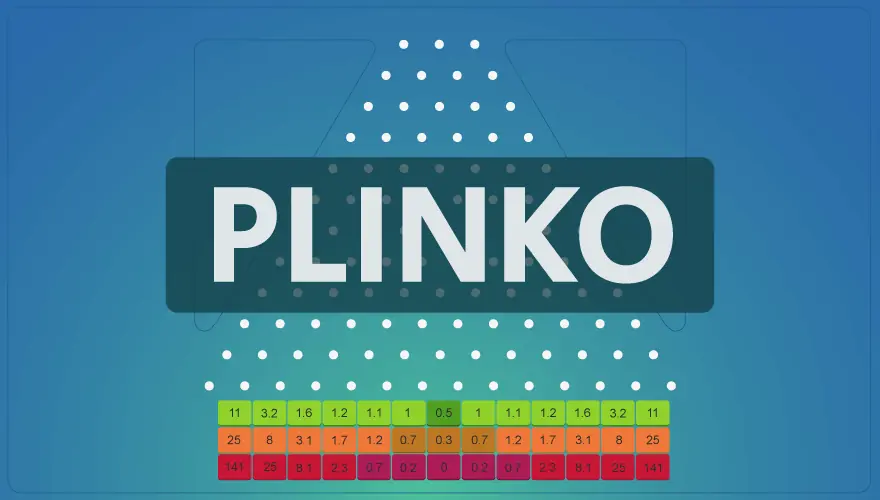
Plinko is a probability-based casino game built around a vertical board filled with pins. The player chooses a stake, often selects a risk level, and in many versions can also adjust the number of rows. A ball is then released from the top and deflects left or right as it hits the pegs on the way down. At the bottom, different slots carry different multipliers. The center usually pays less, while the outer edges can carry much higher returns.
That visual structure matters because it makes randomness feel visible. In many other casino formats, the random process is hidden behind spinning reels, card shoes, or number generators that the player does not really “see” in action. Plinko turns the random event into a short physical-looking journey. Even though the outcome is still determined within the game’s mathematical model, the movement creates a stronger emotional connection to each result.
One reason Plinko became so noticeable across modern gaming platforms is that it is easy to enter and easy to watch. A newcomer understands the interface in moments. A more experienced player immediately sees the appeal of changing risk settings and testing different row configurations. It also suits short sessions. You do not need ten minutes to understand whether the pace works for you.
Most players expect Plinko to behave like a slot, where every spin resolves independently, but the physics-based drop encourages a different mental model: patterns feel traceable even when they are not. The payout structure typically clusters low multipliers around the centre pegs, with high multipliers reserved for the edges, so the volatility is more visible than in a standard game. Session planning therefore tends to matter more than it does with reels, because a run of edge drops can deplete a balance quickly while centre drops grind it down slowly. Where slots reward patience with bonus rounds, Plinko rewards a clear decision about how much risk the edge of the board is worth before the first ball falls.
How the Galaxyno casino Plinko mechanics actually work
At a basic level, the mechanics are straightforward. You set your bet, choose the drop conditions, and launch a ball. But the practical experience depends on several variables that players should understand before treating Plinko as a casual low-effort option.
The first variable is the risk level. In most Plinko versions, low risk spreads the payout structure more gently. That usually means more frequent modest returns and fewer dramatic multiplier jumps. High risk compresses a lot of the value into rarer edge outcomes. In simple terms, low risk tends to produce a steadier flow, while high risk can create long stretches of ordinary or losing results interrupted by occasional large hits.
The second variable is the number of rows. More rows generally mean more deflections before the ball reaches the bottom. That increases the visual suspense and often alters the payout distribution. A shallow board resolves quickly and feels lighter. A deeper board gives the session more tension because each drop has a longer path and the high-end outcomes usually sit further out on the edges.
The third variable is the multiplier map. Not all bottom slots are equal. The middle tends to be safer but less rewarding. The outermost pockets can carry the headline multipliers that attract attention, but they are naturally harder to hit. This is where many players misread the game. The displayed top multiplier is real, but it does not represent the typical session outcome.
| Core element | What it changes | What it means in practice |
|---|---|---|
| Bet size | Value of each drop | Directly affects session cost and emotional pressure |
| Risk level | Payout distribution | Lower risk tends to smooth results; higher risk makes outcomes more uneven |
| Rows | Board depth and path length | More rows often increase suspense and widen the gap between common and rare outcomes |
| Multiplier layout | Potential return zones | High values usually sit at the edges and are hit far less often than central slots |
What matters most here is not the animation itself, but the distribution behind it. Every drop looks like a fresh event, yet over time the board follows a probability pattern. The center zones are usually more likely, and the extreme edges are less likely. That is why Plinko can feel generous in short bursts and still be unforgiving when a player chases only the biggest multipliers.
What creates the appeal and how the pace feels during a real session
Galaxyno casino Plinko has a rhythm that is very different from slots. It is faster, cleaner, and more transparent at the surface. You place a stake, watch a short sequence, get the result, and immediately decide whether to continue. There is almost no dead time. That makes the game highly efficient, but also potentially deceptive in terms of session speed.
A player can move through many rounds in a short period without feeling the same friction that exists in some reel games. There is no need to wait for symbol evaluation, cascading effects, or feature intros. The loop is compact. That is one of Plinko’s strengths, but it is also one of the practical cautions. Fast resolution means bankroll changes can happen quicker than expected.
The interest comes from a mix of visibility and uncertainty. You see the ball react to each peg, so the process feels tangible. At the same time, each bounce can redirect the outcome. This creates a small but constant layer of suspense. It is not the cinematic tension of a bonus round. It is more like repeated micro-drama. Table game fans will get more out of this review after reading Galaxyno Casino poker.
This quiet pacing can lull players into treating rapid-fire rounds as low-stakes entertainment, which is precisely when the cumulative effect of many small losses becomes hard to track. For players, the practical takeaway is to set a round limit or session timer before the first drop, since the game offers no natural pause points to signal how much time or money has actually passed.
How risky Plinko really is and who tends to enjoy it most
Plinko can be low-pressure or highly aggressive depending on configuration. That is why broad statements about the game are often misleading. Saying “Plinko is simple” is true in terms of controls, but not enough in terms of session behavior. A low-risk setup with moderate stakes can feel controlled and easy to track. A high-risk setup with a deeper board can behave more like a chase-oriented format where long dry patches are part of the experience.
Plinko strips the casino experience down to a single, fast decision: drop the ball and watch it fall. That loop suits players who want a clear outcome within seconds, without memorising paytables or tracking bonus rounds. The appeal rests on visible randomness — each drop feels independent, and the result lands immediately. Anyone who enjoys short, self-contained sessions with a clear win-or-lose moment will find it easy to pick up. In most cases, the house edge on such games sits within a typical single-digit range, but the real risk is volatility: a long run of centre-dropping misses can drain a balance far quicker than the average spin, so bankroll pacing matters more than strategy.
On the other hand, players who enjoy narrative progression, themed presentation, or layered bonus structures may find it too bare. Plinko does not build toward a feature in the way many slots do. There is no sense of “unlocking” a bigger mode. Every drop is the core experience. If that single loop does not engage you, the game can become repetitive quite fast.
It is also not ideal for players who struggle with pacing discipline. Because launching another ball is so easy, it is possible to increase volume without noticing how quickly the session is moving.
- Plinko may suit you if you like short rounds, clear controls, visible outcomes, and adjustable risk.
- It may not suit you if you prefer immersive slot features, slower decision-making, or a game structure with more variety between rounds.
What players should understand about probabilities, session flow, and outcomes
This is the section many players skip, and it is the one that matters most. In Plinko, the top multiplier is not the story of the game. The real story is the distribution of ordinary results around the center and the frequency gap between those common landings and the rare edge hits.
Because the ball tends to end in central zones more often than on the far sides, the most eye-catching values are naturally the least common. That does not make the game unfair; it simply means the visible jackpot-style multiplier can distort expectations if the player treats it as a regular target. In practice, the board is usually built so that modest outcomes appear more often, while the largest returns remain exceptional events.
Risk settings change how this feels. On lower risk, the difference between common and rare results is less dramatic. On higher risk, the contrast becomes sharper. You may see many rounds return little or nothing, then suddenly one edge landing changes the session picture. Some players enjoy that uneven pattern. Others find it frustrating because the board can look close to a big result without actually paying one.
A useful way to think about Plinko is not “What is the biggest multiplier?” but “What kind of result pattern am I choosing?” That mindset helps more than staring at the headline number.
| Session style | Typical feel | Main trade-off |
|---|---|---|
| Low risk | More stable, less dramatic | Smaller upside on standout drops |
| Medium risk | Balanced but still swingy | No guarantee of either stability or explosive returns |
| High risk | Sharp variance, stronger tension | Longer stretches of weak outcomes are more likely |
My third observation is that Plinko teaches patience in a strange way. The game looks like pure impulse, but the players who understand it best are usually the ones who stop reading every near-edge bounce as a “missed big moment.” On a probability board, near misses are part of the visual language, not evidence that a large result is getting closer.
How Plinko differs from slots and other casino games
The clearest difference between Plinko and classic online slots is structural. Slots are built around symbol combinations, paylines, reels, and often bonus rounds. Their entertainment value often comes from layered events: base spins, expanding symbols, Galaxyno Casino free spins details for players comparing casino options, multipliers, and feature triggers. Plinko strips all of that away. It reduces the experience to one decision loop and one visible outcome path.
Compared with roulette checks before using Galaxyno Casino, Plinko feels more animated and more tactile, even though both formats rely on probability and house edge principles. Compared with crash-style games, Plinko is less about timing and more about accepting the board’s distribution. Compared with blackjack or poker-based titles, there is no strategic hand management or decision tree once the ball drops.
That means Plinko occupies a very specific place in the casino ecosystem. It is closer to a pure volatility-selection game than to a classic slot adventure. The player is not trying to trigger a feature or outplay a dealer. The player is choosing a mathematical profile and then repeating a compact event within that profile.
Adjustable tension and instant results are what Plinko delivers, whereas a modern video slot leans on layered audiovisual depth and narrative payoff. A player arriving at Galaxyno casino expecting the latter may find the ball-drop format too minimal, yet the same simplicity is precisely what suits someone chasing fast, legible rounds with control over risk. In most cases, slots reward patience through bonus rounds and feature triggers, while Plinko trades that complexity for a direct, self-contained loop. Satisfaction in either case tends to track how well the game matches what the player actually wants, rather than any objective measure of quality.
Practical strengths and weaker points of the format
Plinko has several genuine strengths, but they only matter if they match the player’s style.
First, the learning curve is minimal. You can understand the board quickly without reading a long rule page. Second, the risk controls, when available, give the player a more direct way to shape the session than many standard slots do. Third, the pace is excellent for short play windows. If you want a game that delivers immediate feedback, Plinko does that better than most traditional reel-based formats.
There are also limitations that should not be glossed over. The biggest one is repetition. Because the core loop never changes, the game depends heavily on whether the player enjoys the raw suspense of the drop itself. Another issue is perception. The visible path of the ball can create a stronger emotional reaction to near misses than the actual mathematics justifies. Finally, the speed of play can make bankroll management harder than it appears, especially on aggressive settings.
- Strong point: easy to understand within minutes.
- Strong point: adjustable risk can meaningfully change the session style.
- Strong point: fast rounds suit players who dislike downtime.
- Weak point: limited variety if you need evolving features.
- Weak point: high-risk setups can burn through funds quickly.
- Weak point: visual near misses may encourage unrealistic expectations.
What to check before launching Galaxyno casino Plinko
Before starting, I would focus on a few practical points rather than jumping straight into repeated drops.
- Check the risk setting first. This is not a cosmetic option. It changes the feel of the entire session.
- Look at the multiplier spread. Do not focus only on the biggest number. Pay attention to how many low-value slots dominate the bottom row.
- Set a session pace in your head. Because rounds are quick, it helps to decide in advance how long or how many drops you want to play.
- Use demo mode if available. For a game like Plinko, demo play is useful because it reveals the rhythm and emotional pattern of the board very quickly.
For many players, the key question is not whether Plinko can pay well on a lucky run. It can. The better question is whether they enjoy the road to those outcomes. If the answer is yes, the game has real value. If not, the simplicity can turn into monotony.
Final verdict on Galaxyno casino Plinko
Galaxyno casino Plinko offers a clean, fast, probability-driven experience built around one of the simplest concepts in online gaming: drop a ball, follow the path, collect the multiplier where it lands. What makes it worth attention is not complexity, but clarity. The game shows the random event in a way that feels immediate and easy to read, while still allowing meaningful variation through risk levels and board depth.
Its strongest qualities are speed, accessibility, and the ability to shift from relatively controlled play to highly uneven sessions with just a few setting changes. That flexibility is a real advantage. At the same time, caution is necessary because the same fast rhythm that makes Plinko engaging can also make it expensive if the player treats it too casually or chases the rarest edge outcomes.
I would recommend Plinko primarily to players who enjoy short rounds, visible randomness, and a format where every drop is the main event. I would be more cautious recommending it to those who want rich slot features, slower pacing, or a stronger sense of progression across the session. In practical terms, Plinko is not a replacement for every casino game style. It is a very specific format with a very specific appeal.
If you approach Galaxyno casino Plinko with the right expectations, it can be one of the clearest examples of how a simple interface can still produce a tense and highly variable session. The key is to respect the gap between what the board looks like and how its probability structure actually behaves. That gap is where the game becomes either smart entertainment or a poor fit, depending on the player.
FAQ
How does Plinko work on the official casino site?
A ball drops from the launcher and bounces across the grid until it lands in one of the payout zones. The zone it finishes in determines the multiplier for that round.
What should be checked before starting a real-money Plinko round?
Confirm the stake and round settings on the Plinko game panel before pressing Start. Make sure the account is in real-money mode and that the cashier balance is sufficient for the selected stake.
What is the usual path to open Plinko from the casino lobby after sign up?
Sign up, log in, then open the game lobby and select the Plinko tile. If it is available under live casino or casino games categories, the lobby will show the correct Plinko listing.